Lima on Screen
A Century of Urban Cinema, 1938–2024
This narrative traces how Lima has been seen, imagined, and constructed through cinema over nearly ninety years. It moves between two parallel timelines: the history of the films themselves, and the history of the places they chose to inhabit. Together they tell a story about a city in constant negotiation with its own image — what it wants to be, what it cannot escape, and what it films when it wants to remember.
The City Before the Conflict 1938–1968
Before the years of internal crisis, Lima's cinema looked outward and upward — to the republican grandeur of its historic centre, to the comedy of its streets, to a city that believed in its own modernity.
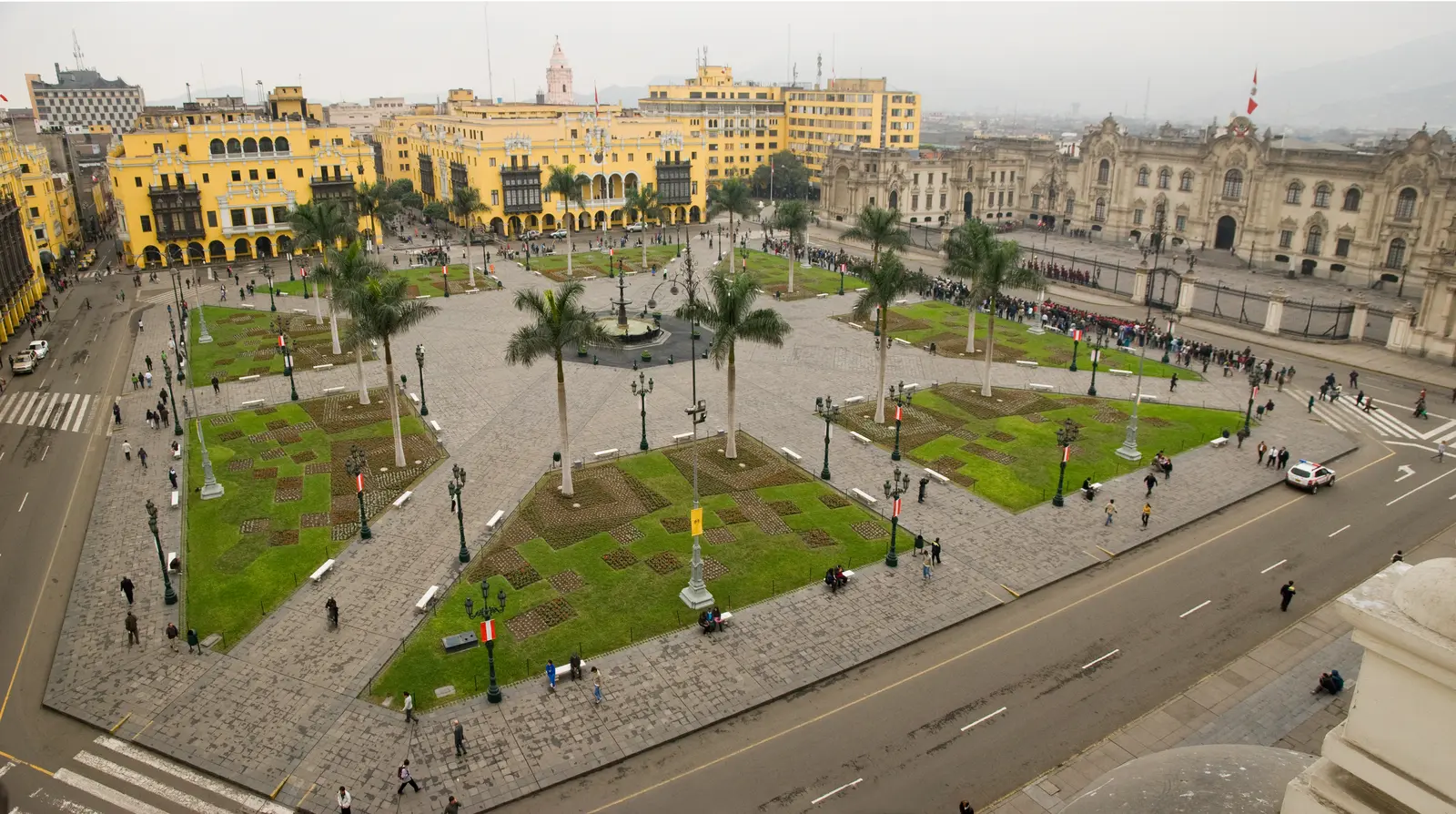
San Martin Square — Centro Histórico
Palomillas del Rímac opens in Plaza San Martín. One of the earliest surviving examples of Peruvian fiction cinema shot on location in the city.
Las Sicodélicas takes to the streets of downtown Lima during a period of rapid social transformation. The Lima of 1968 still gravitates toward the historic downtown, not yet the southern districts that will dominate later decades.
The decade that follows marks a fracture. Peru enters a period of political upheaval — the 1968 military coup, agrarian reform, and the slow build of an internal conflict. Cinema turns darker. The city it films begins to show its wounds.
Children of the Crisis 1984–1991
Grupo Chaski documents the lives of those the city has abandoned. The port, the river, the market — the spaces of labour and survival — move to the centre of the frame.
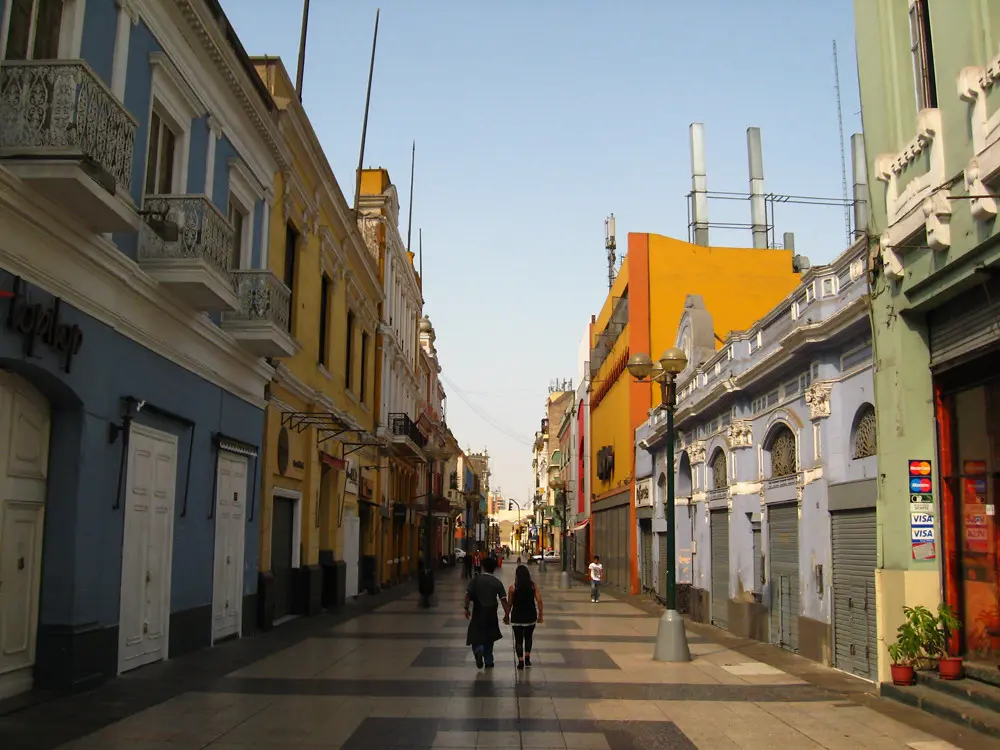
Jirón de la Unión — Centro Histórico
Grupo Chaski releases Gregorio, a neorealist portrait of a child migrant navigating Lima's streets. Location as document.
Grupo Chaski returns with Juliana. The same locations reappear — deliberately: these spaces have not changed because the conditions that produce them have not changed. Cinema as witness.
Lombardi's Caídos del Cielo weaves three stories of crisis-era Lima. The city has not moved; its meaning has been transformed.
Alias "La Gringa" uses the port and the decommissioned prison island of El Frontón: the working waterfront and the site of a massacre the country has not fully reckoned with.
July 16, 1992. A car bomb on Calle Tarata kills 25 people. The violence of the internal conflict has reached the city's most protected districts. Cinema begins to look back — and, tentatively, forward.
Reckoning and Recovery 1993–2002
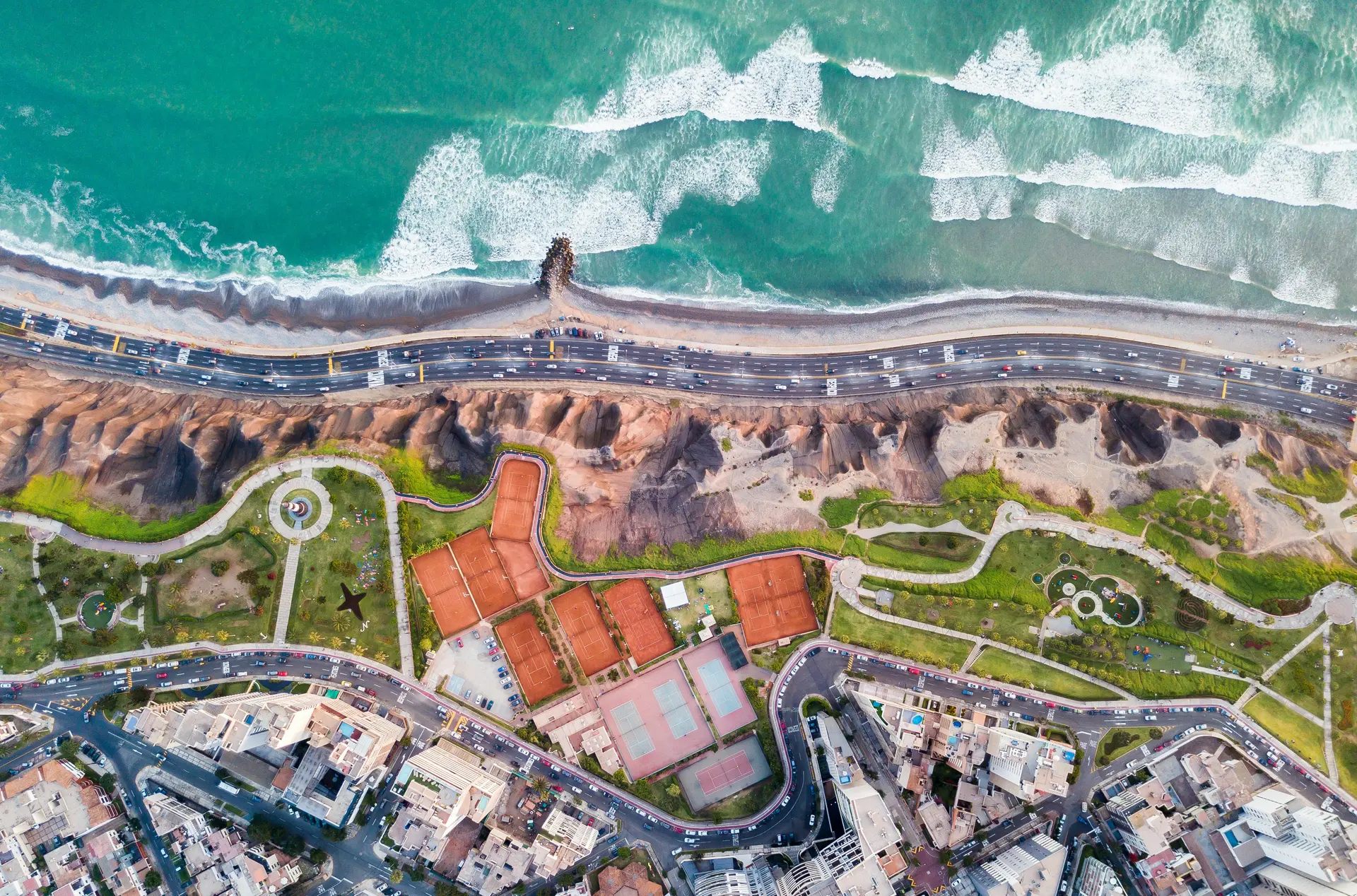
Malecón de Miraflores
Honigmann's Metal y Melancolía follows Lima's informal taxi drivers at night — beauty and exhaustion in equal measure.
Lombardi's No Se Lo Digas a Nadie. Larcomar — opened the same year — makes its first cinematic appearance. Lima's most exclusive spaces reveal what they conceal.
The 2000s bring sustained economic expansion. Cinema follows, producing films simultaneously more commercially sophisticated and more socially self-aware.
The City of Aspiration 2007–2024
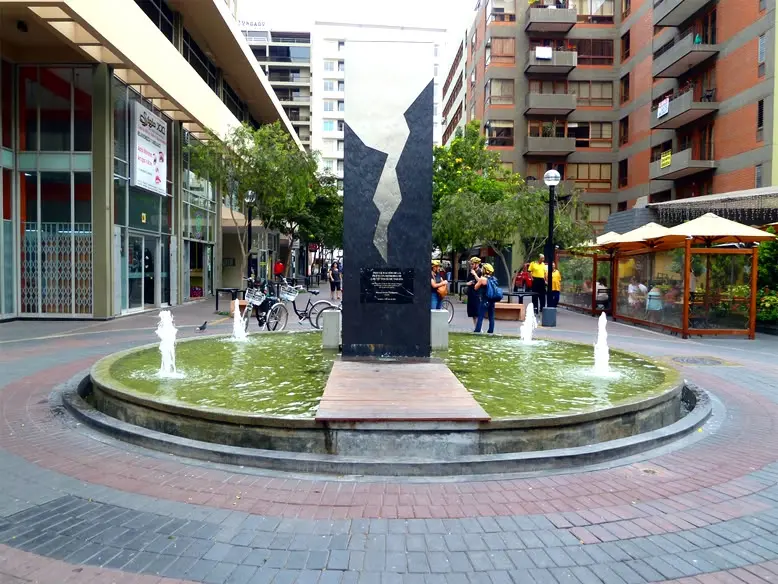
Calle Tarata — Miraflores
Aguilar's Tarata reconstructs the 1992 bombing on the street that bears its name. The film refuses to let the city forget.
¡Asu Mare! moves across Lima's class geography — from the public beach to the Golf Club — a film about crossing the city's invisible boundaries.
La Hora Final reconstructs the DINCOTE operations. Lima's urban fabric as evidence.
Esta es la U marks the centenary of Universitario de Deportes — collective memory as documentary.
Key locations across Lima — all districts represented in the timeline.
Itinerary 1: A Walking Tour of Cinematic Miraflores
A walking route through Miraflores
For the first itinerary, we propose a walking tour through Miraflores, one of Lima’s most recognizable and tourist-oriented districts. The starting point is Kennedy Park, located in the center of the district and surrounded by restaurants, shops, cultural spaces, and intense urban activity. Its constant movement and role as a meeting place make it an appropriate setting for representing everyday life in the city.
This location is connected with Lima 13, directed by Fabrizio Aguilar, and with Gregorio, a Grupo Chaski production that presents Lima through the experience of a migrant child who begins working in its streets. In this context, Kennedy Park allows visitors to observe the contrast between the tourist image of Miraflores and the different social realities that coexist in its public spaces.
Calle Tarata — Miraflores
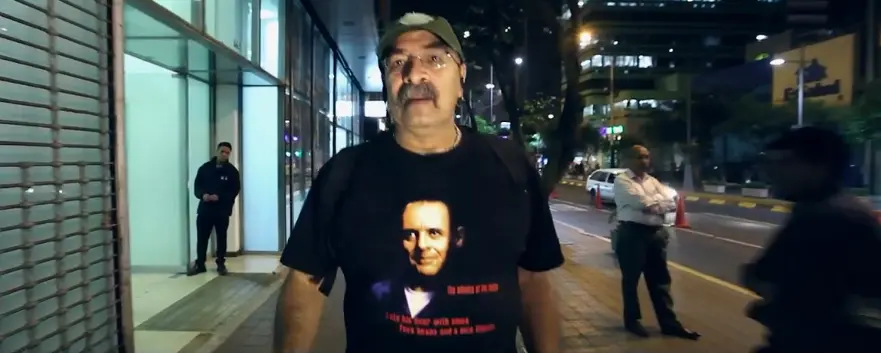
From the park, the route continues toward Tarata Street, located only a few minutes away and very close to Larco Avenue. This stop introduces a historical and memorial dimension to the itinerary. The street acquired particular importance after the bombing that occurred on July 16, 1992, during the period of internal violence in Peru. After the attack, the area was rebuilt and transformed into a pedestrian, commercial, and tourist space, becoming a symbol of urban recovery.
The cinematic connection of this location can be found in Tarata, a film by Fabrizio Aguilar that reconstructs the context of the bombing through the experience of a family from Lima. In the film, the street is not merely a geographical reference but the historical and symbolic center of the narrative. This stop encourages reflection on memory, fear, and the effects of political violence on everyday life.
Avenida Larco — Miraflores
After visiting Tarata Street, the walk continues along Larco Avenue, one of the main commercial and tourist thoroughfares in Miraflores. The avenue connects the district’s traditional center, where Kennedy Park and the Municipality of Miraflores are located, with the coastal area and the Malecón de la Reserva. Along the way, visitors can observe hotels, restaurants, cafés, shops, and entertainment venues that reflect the urban development of Miraflores during the twentieth century.
The avenue is directly connected with Avenida Larco, la película, a documentary dedicated to the history of the Peruvian rock band Frágil and one of its best-known songs. It can also be associated with Gregorio, since the film presents the streets of Miraflores as spaces of movement, child labor, and social contrast. Larco Avenue can therefore be observed both as a symbol of Lima’s urban culture and through the experience of those who travel through the city in order to survive.
Following the avenue toward the ocean, the route reaches the Miraflores Boardwalk, a corridor of parks and pedestrian paths built along the cliffs of the Costa Verde. From this point, visitors can observe the Pacific Ocean, the beaches, coastal traffic, and some of Lima’s most representative landscapes. The boardwalk allows the route to move away from the commercial activity of central Miraflores toward a more open and contemplative image of the city.
This location is connected with Caídos del cielo, a film by Francisco Lombardi that presents a Lima marked by loneliness, inequality, and the lives of characters who inhabit different parts of the capital. It is also associated with Metal y melancolía, a documentary by Heddy Honigmann that follows several taxi drivers in Lima and portrays the city through their journeys, financial difficulties, and personal experiences. In both productions, the urban landscape is an essential part of the story and reveals a version of Lima that goes beyond its tourist image.
To conclude the itinerary, visitors can return toward the center of Miraflores along Larco Avenue and continue to Pizza Street, officially known as San Ramón Boulevard. This pedestrian area is located only a few meters from Kennedy Park and is known for its restaurants, cafés, bars, and entertainment venues. During the 1970s and 1980s, it became especially popular because of its concentration of pizzerias and intense nightlife. It was later renovated and transformed into a more organized, safer, and pedestrian-friendly boulevard.
Pizza Street is connected with Arde Lima, a documentary directed by Alberto Castro that portrays Lima’s drag scene and uses different urban and nightlife spaces as part of its visual landscape. This final stop therefore concludes the itinerary by presenting another side of Miraflores: its nightlife, entertainment, diversity, and forms of social life, which also contribute to Lima’s audiovisual identity.
As a whole, the itinerary connects five different images of Miraflores: the public and social space of Kennedy Park, the historical memory of Tarata Street, the commercial movement of Larco Avenue, the coastal landscape of the boardwalk, and the nightlife of Pizza Street. Through these locations and films, visitors can observe how Peruvian cinema has represented the district from social, historical, cultural, and urban perspectives.
Itinerary 2: Residential and Cinematic San Isidro
Natural heritage, elite architecture and community life
The second itinerary takes place in San Isidro, one of Lima’s most representative residential, historical, and financial districts. Unlike the more tourist-oriented circuit of Miraflores, this route introduces visitors to spaces connected with urban memory, residential architecture, and the different ways of life that have developed in the district. The itinerary includes three main locations: El Olivar Forest, Country Club Lima Hotel, and the Santa Cruz Residential Complex.
Bosque El Olivar — San Isidro
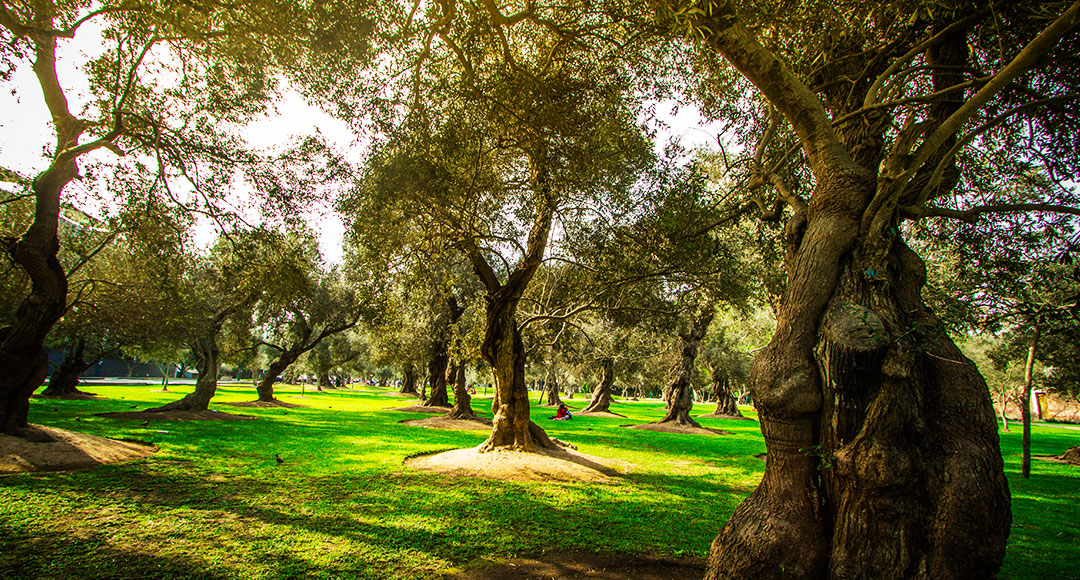
The route can begin at El Olivar Forest, one of the most important natural and historical spaces in San Isidro. The forest preserves ancient olive trees, pedestrian paths, gardens, an artificial lagoon, and rest areas. Its presence within a residential and business district creates a strong contrast between nature and Lima’s urban growth.
El Olivar Forest is connected with La última tarde, directed by Joel Calero. Its paths, old trees, and quiet surrounding streets contribute to an intimate and contemplative image of the city. This first stop therefore introduces a cinematic representation of San Isidro associated with memory, the passage of time, and personal relationships.
Country Club Lima Hotel — San Isidro
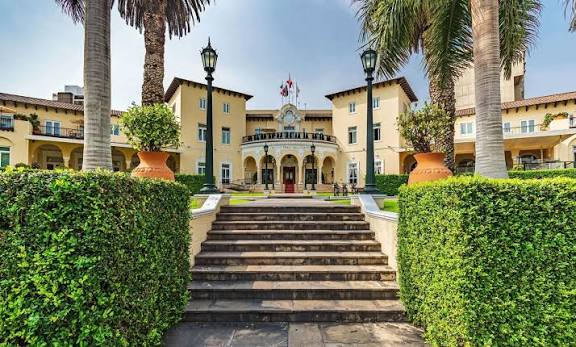
From El Olivar, the itinerary can continue toward Country Club Lima Hotel, one of the most elegant historical buildings in San Isidro. It is located opposite the Lima Golf Club area and was inaugurated in 1927. Its Californian Colonial-style architecture includes arches, balconies, interior courtyards, gardens, large halls, and ceremonial spaces.
For several decades, the Country Club was an important meeting place for members of Lima society, diplomats, politicians, artists, and international visitors. Today, it operates as a luxury hotel and preserves a collection of viceregal art, as well as much of its original architectural character.
Country Club Lima Hotel is connected with Un mundo para Julius, the film adaptation of Alfredo Bryce Echenique’s novel, directed by Rossana Díaz Costa. The elegance of the building, its gardens, and its interiors visually represent the environment of Lima’s upper class portrayed in the story. This stop therefore offers a critical perspective on luxury, social inequality, and the lifestyles of Lima’s privileged classes.
Santa Cruz Residential Complex — San Isidro
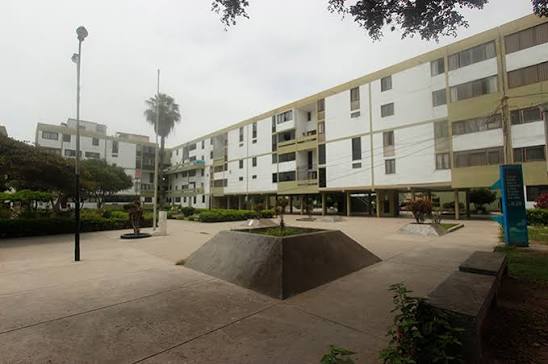
Finally, the itinerary can continue toward the Santa Cruz Residential Complex, a housing development built during the 1960s. Its architecture follows the principles of the modern movement and is characterized by residential blocks, elevated corridors, exterior staircases, courtyards, gardens, and shared spaces.
The Santa Cruz Residential Complex presents a different image of San Isidro. Instead of large hotels, office buildings, or private residences, this stop shows a multifamily housing project designed to encourage natural lighting, pedestrian circulation, and community life. Its plazas, gardens, and interior passageways continue to function as meeting spaces for residents.
The Santa Cruz Residential Complex is connected with Gen Hi8. Its modernist architecture and the atmosphere it preserves from the second half of the twentieth century make it an appropriate space for representing family life, childhood, community, and Lima’s urban memory.
As a whole, the itinerary presents three different images of San Isidro. El Olivar Forest, connected with La última tarde, shows the historical, natural, and contemplative side of the district. Country Club Lima Hotel, associated with Un mundo para Julius, presents the elegant and exclusive world of Lima’s upper class. Finally, the Santa Cruz Residential Complex, connected with Gen Hi8, represents modern architecture and community life.
In this way, the itinerary shows that San Isidro is not only a financial district but also a cinematic space composed of natural areas, historical buildings, and residential developments that reflect different stages of Lima’s urban and social transformation.
Route: 1. Bosque El Olivar → 2. Country Club → 3. Santa Cruz
Itinerary 3: From Jorge Chávez Airport to Cinematic Callao
From modernisation and neighbourhood memory to maritime Callao
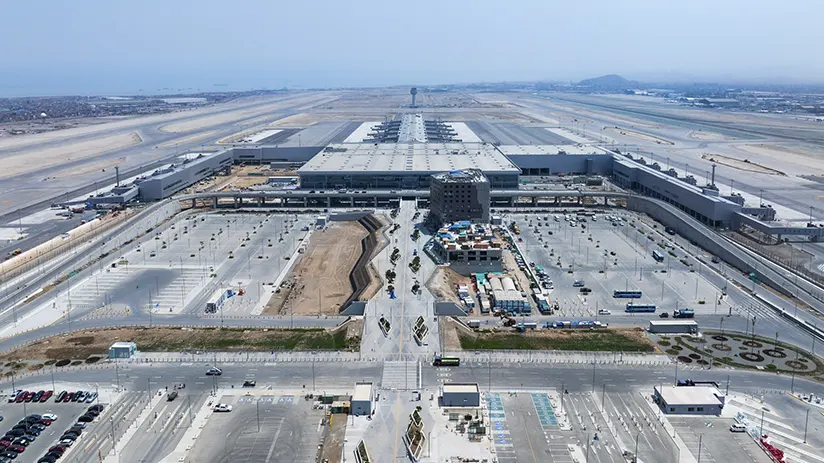
Jorge Chávez International Airport — Callao
The route can begin at Jorge Chávez International Airport, Peru’s main airport and the entry point to Lima for many visitors. Although commercial operations now take place in the new terminal, the former airport building was one of the main symbols of Lima’s modernization during the second half of the twentieth century.
This location appears in El embajador y yo, a Peruvian comedy starring Kiko Ledgard, Patricia Aspíllaga, and Saby Kamalich. The film includes sequences recorded in the former terminal of Jorge Chávez Airport. Its arrival halls, large windows, boarding stairs, and exterior platforms projected a modern and cosmopolitan image of the city during the 1960s. The airport therefore provides an appropriate starting point for the route, connecting the arrival in Lima with the international travel, diplomatic missions, and intrigue that form part of the film.
From the airport, visitors are advised to take a taxi to the Callao Monumental area, a tourist circuit renovated approximately ten years ago that brings together urban art, historic mansions, Republican-era balconies, historical squares, and streets connected with the maritime memory of Peru’s main port.
The film connected with this stop is Viejos amigos (2014), directed by Fernando Villarán. The story follows three elderly men who steal the urn containing their friend’s ashes and take it through his old neighborhood in Callao. Their objective is to fulfill his final wish by scattering the ashes in the sea near his hometown. Callao Monumental therefore functions as an ideal entrance into the world of the film, with its historic streets, local squares, neighborhood memory, and strong emotional connection with the port.
The itinerary can then continue toward La Punta, a coastal district that changes the tone of the route. To reach it, visitors can take bus line 1133 from Plaza Grau in Callao, get off at Plaza Matriz in La Punta, and walk directly to Cantolao Beach.
A large part of Viaje a Tombuctú (2014), directed by Rossana Díaz Costa, was filmed at this beach. The film tells the story of two teenagers growing up during the period of political violence and economic crisis in Peru in the 1980s. At this stop, the focus moves away from the urban and monumental areas of Callao toward a more intimate, coastal, and nostalgic image associated with adolescence, family memory, and the passage of time.
Cantolao is also connected with Viejos amigos, maintaining a link with the first part of the route. Its pebble coastline, relatively calm waters, and views of the islands show the historical and everyday relationship between the people of Callao and the Pacific Ocean.
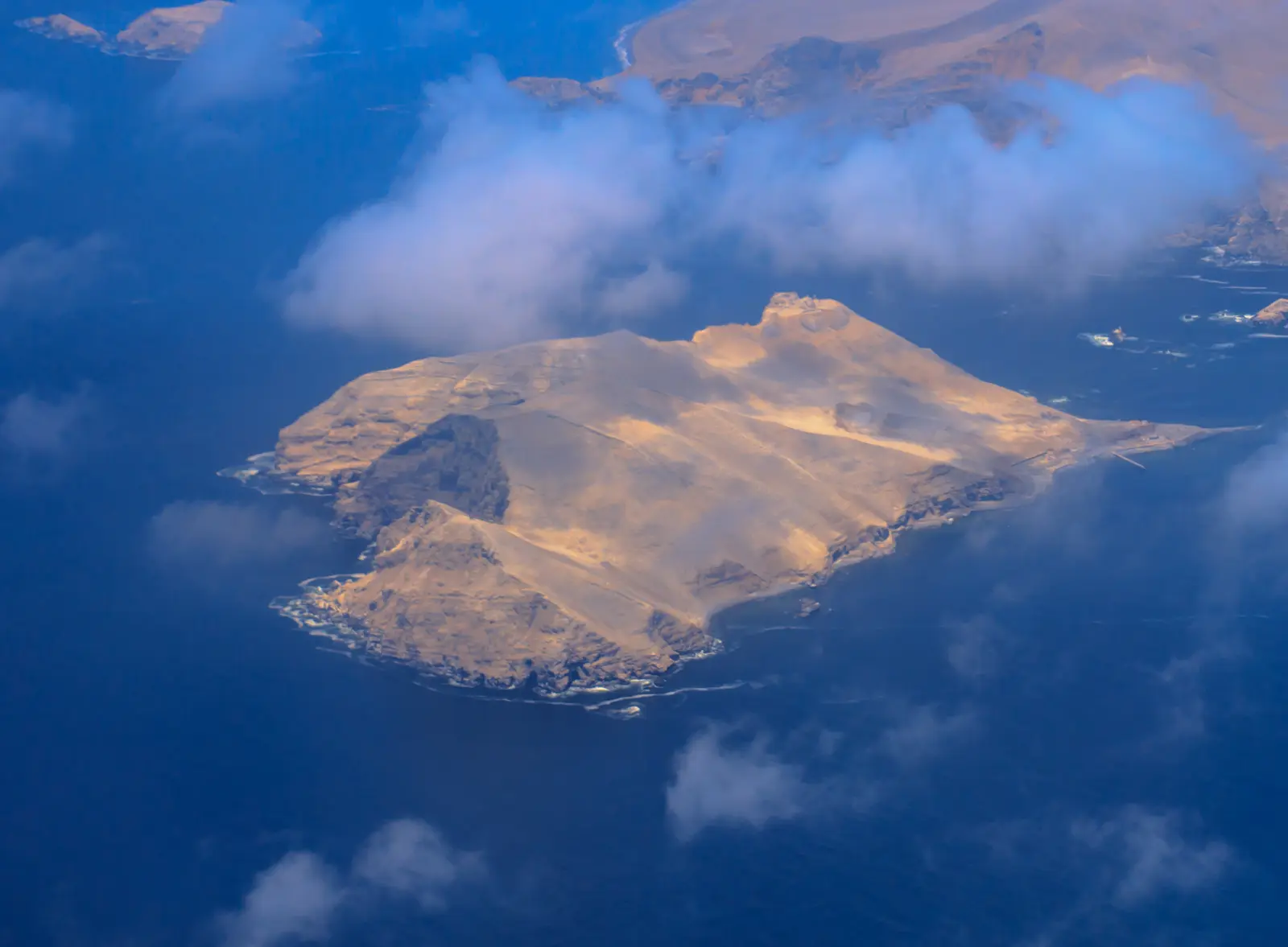
Isla El Frontón — Callao
Finally, the route can end with a view of the islands of Callao. Boats depart from Cantolao Beach and offer tours around the bay, allowing visitors to observe locations such as San Lorenzo Island and El Frontón Island. However, direct access to El Frontón is restricted, so disembarking on the island is not always possible.
El Frontón is the main location of Alias “La Gringa” (1991). The film tells the story of a daring fugitive who voluntarily returns to the feared prison on El Frontón Island to rescue a professor who previously saved his life. Surrounded by the sea and marked by the remains of its former prison infrastructure, the island becomes the central and oppressive setting of the story.
The itinerary therefore connects four different cinematic images of Callao: the modernity and international travel represented by Jorge Chávez Airport in El embajador y yo; the streets, neighborhood memory, and port landscape of Callao Monumental in Viejos amigos; the nostalgic coastline of Cantolao in Viaje a Tombuctú; and the historical and prison-related isolation of El Frontón Island in Alias “La Gringa”.
Itinerary 4: Lima, Violence and Memory
From political violence and surveillance to memory and reflection
Calle Tarata — Miraflores
This itinerary connects Tarata, La Hora Final, and La última tarde through their relationship with Peru’s Internal Armed Conflict and the way this history remains visible in Lima’s urban landscape. Rather than presenting the conflict only through dates and political events, the route explores how violence entered everyday spaces, how the city became part of intelligence and surveillance networks, and how the memory of the conflict continued to shape individual lives long after its most intense years.
The route begins at Calle Tarata in Miraflores. On 16 July 1992, Shining Path carried out a car-bomb attack here, one of the most emblematic episodes of political violence in Lima during the Internal Armed Conflict. An ordinary residential and commercial street was suddenly transformed into a site associated with destruction, death, and collective trauma.
This location is directly connected with Tarata, a film that approaches the event through the experiences of a family living in Miraflores. Instead of treating political violence only as a national or military issue, the film shows how the conflict entered homes, routines, relationships, and apparently protected areas of the capital. Calle Tarata therefore becomes more than a setting: it is both a historical location and a site of memory, where the consequences of the conflict remain part of Lima’s contemporary urban landscape.
This first stop also provides an important historical perspective. Although the greatest impact of Peru’s Internal Armed Conflict was experienced outside Lima, particularly among rural, poor, and Indigenous communities, the late 1980s and early 1990s saw political violence become increasingly visible in the capital. The Tarata bombing became one of the clearest examples of this transformation.
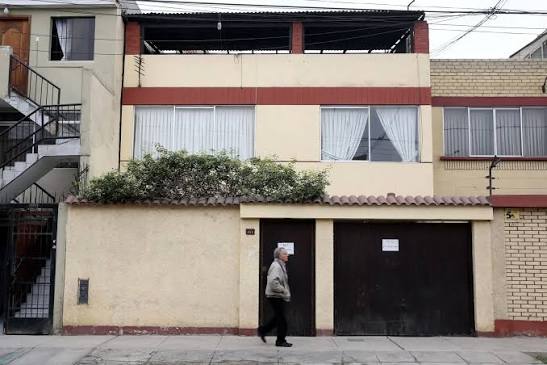
Calle Varsovia — Surquillo
From Miraflores, the itinerary continues to Surquillo and the historical location connected with La Hora Final. The film reconstructs the intelligence operation that led to the capture of Abimael Guzmán, leader of Shining Path, on 12 September 1992, only a few weeks after the Tarata bombing.
A key historical reference for this part of the route is Calle Varsovia, where Guzmán was arrested after a long surveillance operation carried out by the GEIN, the Special Intelligence Group of the Peruvian police. Unlike the first stop, where violence becomes dramatically visible, this part of the itinerary reveals a more hidden dimension of the conflict.
In La Hora Final, Lima becomes a network of houses, streets, cars, institutions, and apparently ordinary spaces used for observation and intelligence work. Residential areas could conceal political activity, while police agents reconstructed networks by studying daily routines and movements. The city itself becomes part of the investigation, showing how the conflict operated not only through spectacular acts of violence but also through secrecy, surveillance, and information.
The capture of Guzmán represented a major turning point in the Internal Armed Conflict, although it did not immediately bring political violence to an end. By placing Tarata and La Hora Final next to each other, the itinerary connects two crucial moments of 1992: the dramatic visibility of political violence in Lima and the intelligence operations that were simultaneously attempting to dismantle Shining Path’s leadership.
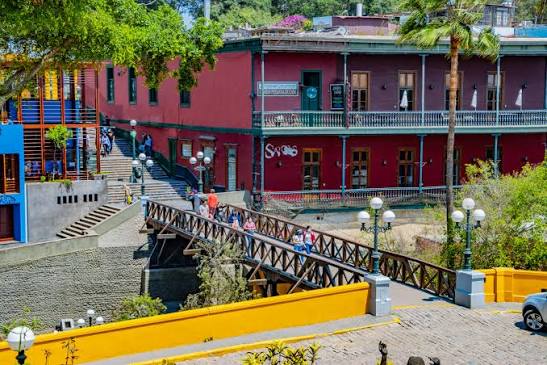
Puente de los Suspiros — Barranco
The final part of the route moves toward Barranco, changing both the historical period and the emotional tone of the itinerary. La última tarde does not reconstruct a bombing, an arrest, or another major historical event. Instead, it explores what remains after political violence has receded from everyday life.
The film follows Laura and Ramón, two former political militants who meet again many years after their separation to finalize their divorce. As they walk through Lima and revisit their shared past, their conversation gradually brings back political ideals, personal decisions, resentment, affection, and unresolved memories connected with the years of conflict. The streets of the city become spaces where personal and political history overlap.
This makes La última tarde fundamentally different from the previous two films. In Tarata, the city records physical destruction. In La Hora Final, it conceals people, information, and surveillance networks. In La última tarde, the city becomes a space for remembering and reconsidering the past. Walking itself becomes part of the process through which memory returns.
Together, the three films create a chronological and emotional journey through Lima. Tarata represents the moment in which political violence becomes dramatically visible in the capital; La Hora Final reveals the hidden intelligence networks operating beneath ordinary urban life; and La última tarde explores how the conflict continues through memory, relationships, guilt, and political reflection.
The itinerary therefore moves from violence, to surveillance, and finally to memory. It does not attempt to provide a complete history of Peru’s Internal Armed Conflict, whose greatest human impact was experienced outside Lima. Instead, it focuses specifically on how the conflict entered the capital and how Peruvian cinema has used its streets, houses, and public spaces to represent different stages of that history. In this route, Lima is not simply the background of the films: the city itself becomes part of the historical narrative.