This project takes a single Wikipedia article for the 2018 video game God of War — and progressively lifts its content into a Linked Open Data graph. Fifteen entities are identified across three narrative layers (production, fictional, mythological) plus two subject concepts; encoded in TEI/XML with authority reconciliation to Wikidata and VIAF; transformed into an interactive HTML rendering; modelled conceptually against a reused vocabulary of dcterms, schema.org, FOAF, SKOS, and DBpedia; and finally serialised as an RDF/Turtle graph of 104 triples across 18 subjects.
The interesting modelling problem lies in how the game reinterprets its mythological source. The 2018 God of War takes six figures from Norse mythology: Odin, Thor, Freyja, Baldur, Loki, Jörmungandr, and redraws their genealogy in ways that do not match the received tradition: in the game Freyja is Baldur's mother, where the Prose Edda attributes that role to Frigg; the young character Atreus is revealed to be Loki, the mythological father of the World Serpent whom the pair encounter on the boat. Standard vocabularies do not carry a property that means "fictional reinterpretation of a mythological figure", so this project introduces a single coined term, gow:reinterprets, as a subproperty of dcterms:relation. The graph is built so that a mythological figure's Wikidata identity is preserved (through gow:reinterprets) while the game's alternative genealogy is stated in its own right (through schema:children), without collapsing the two into a single owl:sameAs assertion.
Course context
Individual project for the Information Science and Cultural Heritage course, taught by Prof. Francesca Tomasi and Prof. Marilena Daquino in the Digital Humanities and Digital Knowledge (DHDK) MA at the University of Bologna, academic year 2025-2026.
Myth and reinterpretation, side by side
For each figure, the traditional depiction and the game's portrayal are shown together, with a short note on where the game follows its source and where it departs from it, the same distinction that gow:reinterprets and schema:children keep separate in the RDF graph.
Kratos
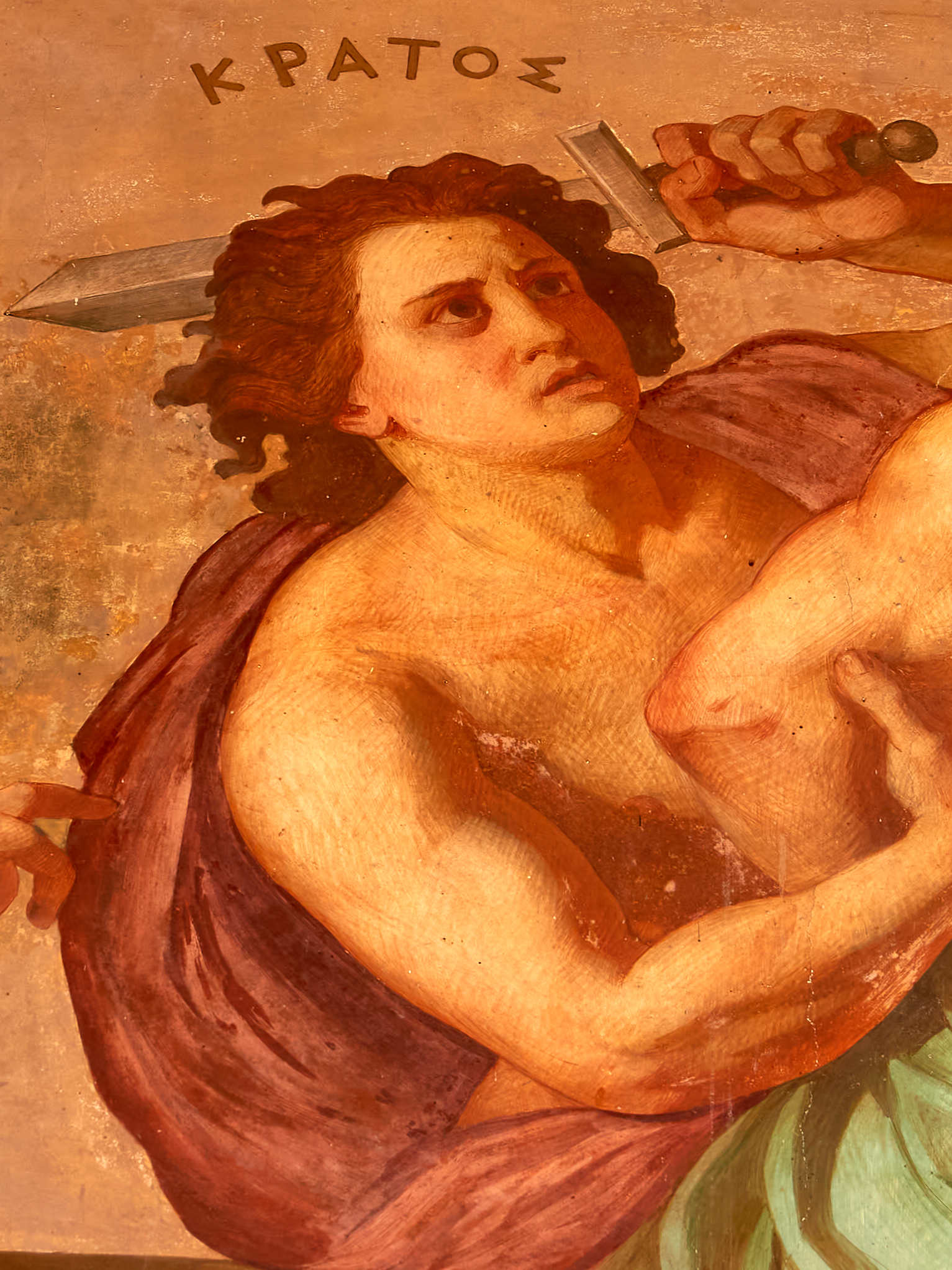
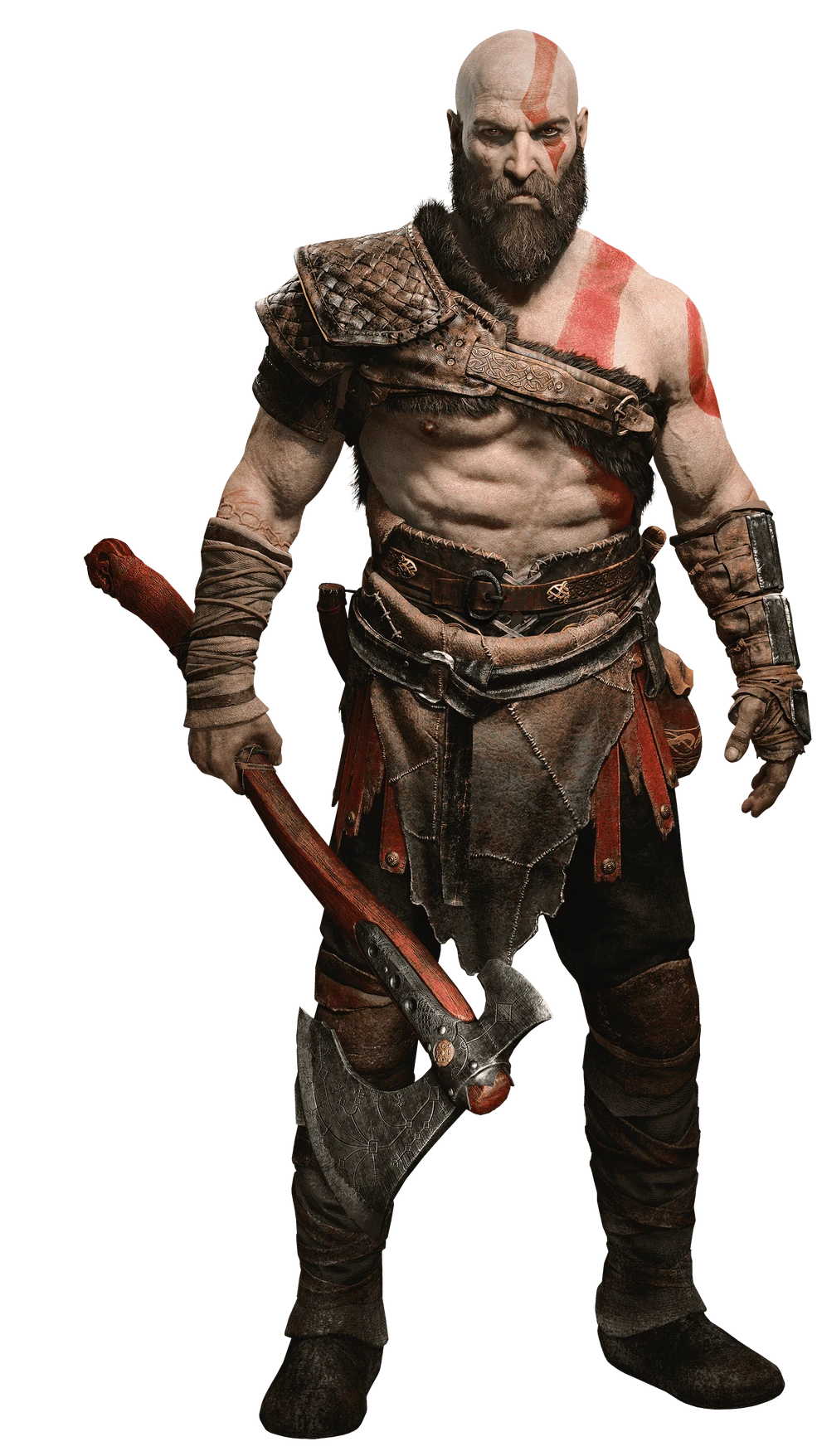
The name itself is the reinterpretation. In Greek myth, Kratos (Κράτος, "Strength") is a minor god, son of the Titan Pallas and the river Styx, best known from Aeschylus's Prometheus Bound as the enforcer who drags Prometheus to his punishment on Zeus's orders — power with no will of its own, purely instrumental. The game's Kratos starts as the inversion of that: rage acting entirely on its own account, answerable to no one. The 2018 game pushes him a third way, toward a man trying to stop being an instrument of his own violence for his son's sake — a namesake he spends three decades trying to outgrow.
Odin
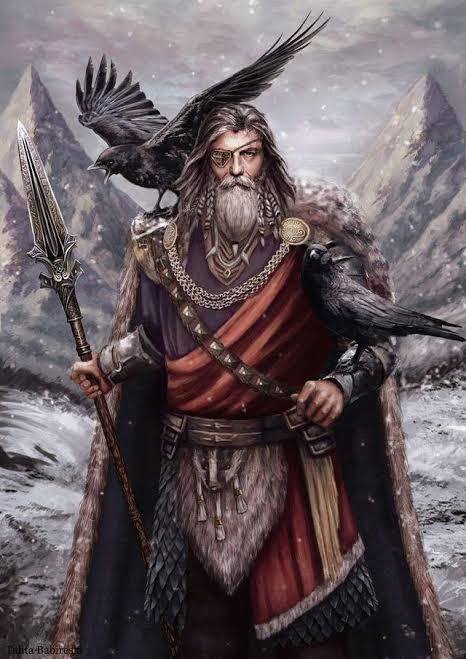
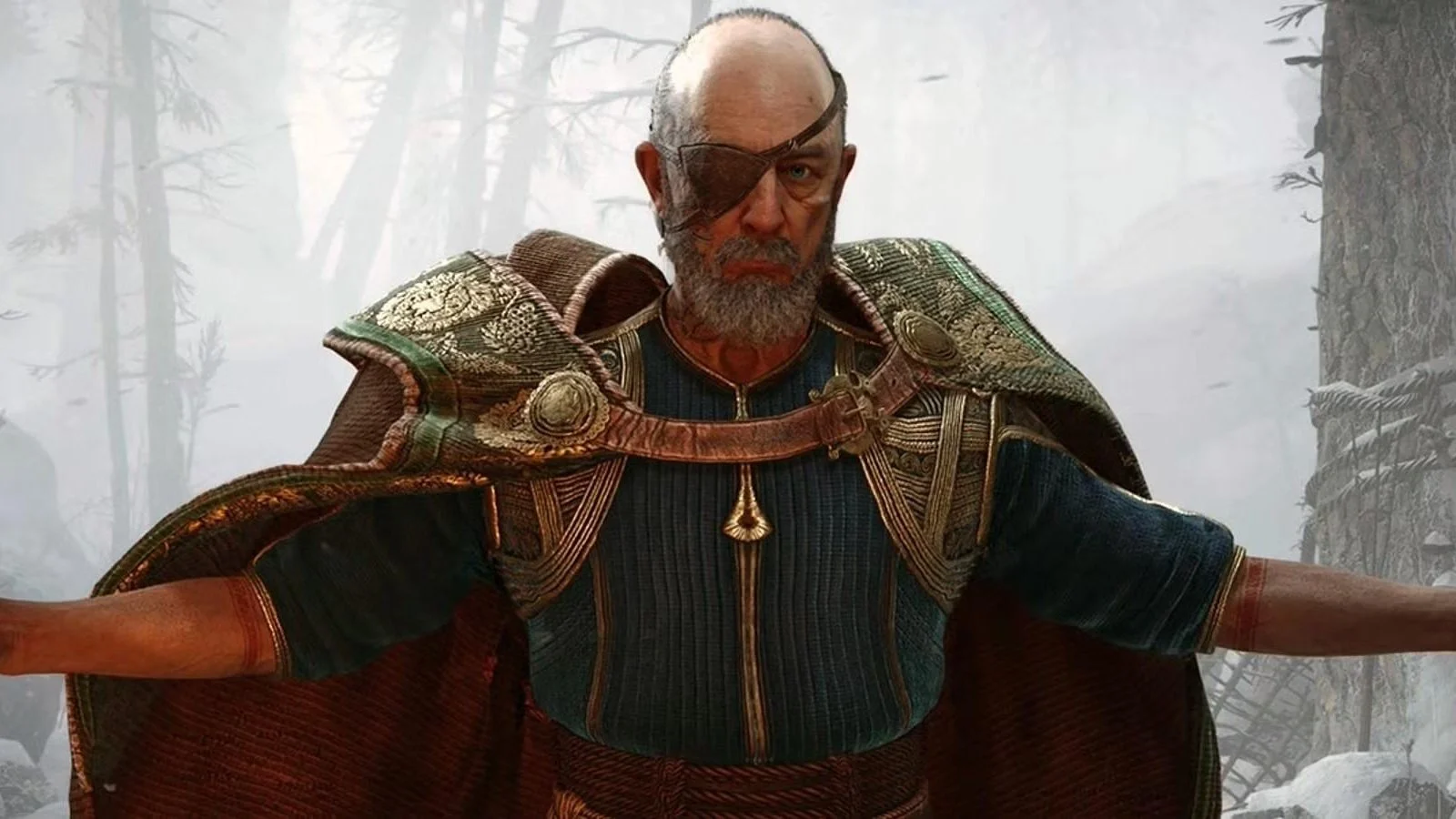
Myth's Odin is the Allfather: one-eyed (the price of wisdom at Mímir's well), attended by his ravens Huginn and Muninn, obsessively gathering knowledge to delay Ragnarök. The 2018 game keeps him almost entirely offscreen, known only through his actions: surveilling Faye's family, engineering Týr's death. His hunger for knowledge survives the adaptation, recast as control rather than wisdom-seeking. The in-game render included here is revealed in the sequel game from 2022, but I decided to include it for visual reference.
Thor
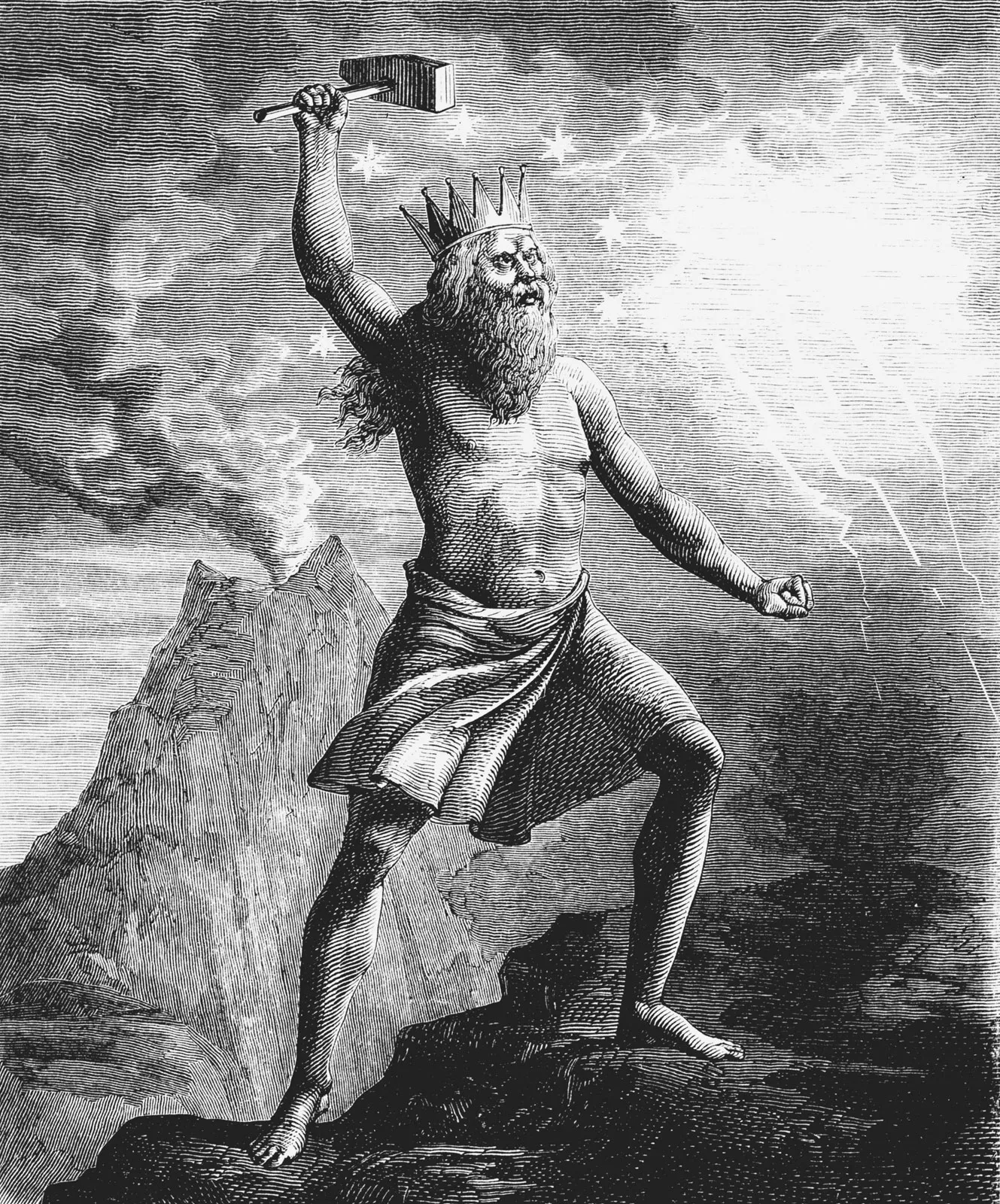
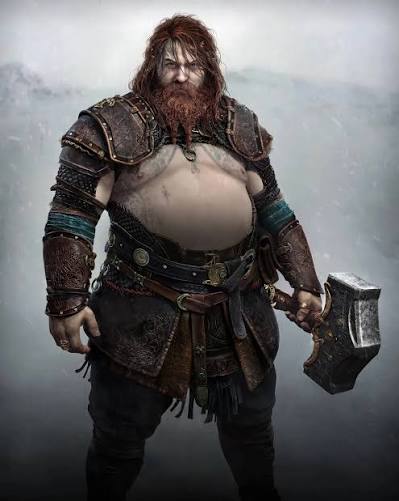
This particular engraving crowns Thor and poses him like a thunder-king closer to Zeus than to the brawling, impulsive Thor of the Eddas — a reminder that "the mythological Thor" is itself already a layered reception history before the game ever touches it. The 2018 game keeps him almost entirely withheld, glimpsed only in a closing vision; what's already established, through his sons Modi and Magni, is a figure whose approval is violently sought and rarely given — the game's version of Thor is built out of the shadow he casts before he ever appears.
Freyja
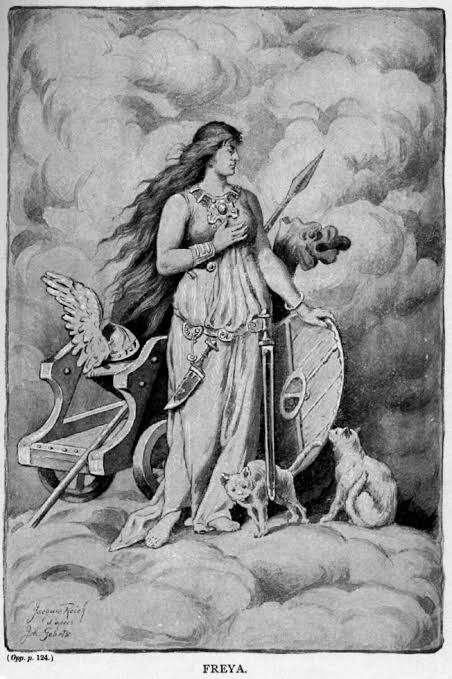
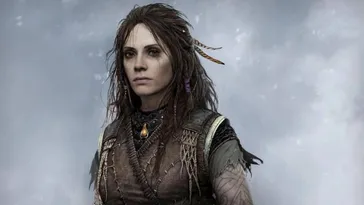
Traditionally a Vanir goddess of love, fertility, and war who receives half the battle-slain in her hall Fólkvangr — independent, powerful, married to the enigmatic Óðr. The game keeps her power and her Vanir origin but gives her a role that belongs to a different goddess in the sources: Baldur's mother. In the Prose Edda that role is Frigg's, not Freyja's. This is the clearest case in the whole project of the game collapsing two distinct figures into one — see the RDF graph's gow:freyja schema:children gow:baldur triple, which states the game's genealogy directly rather than importing it as fact about the mythological Freyja.
Baldur
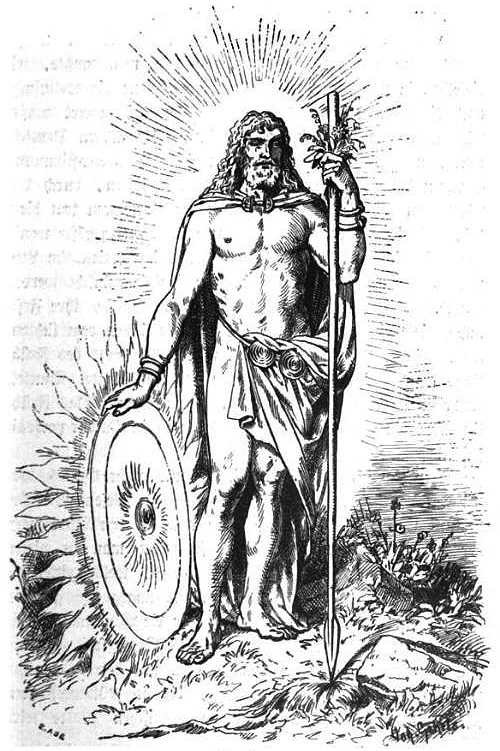
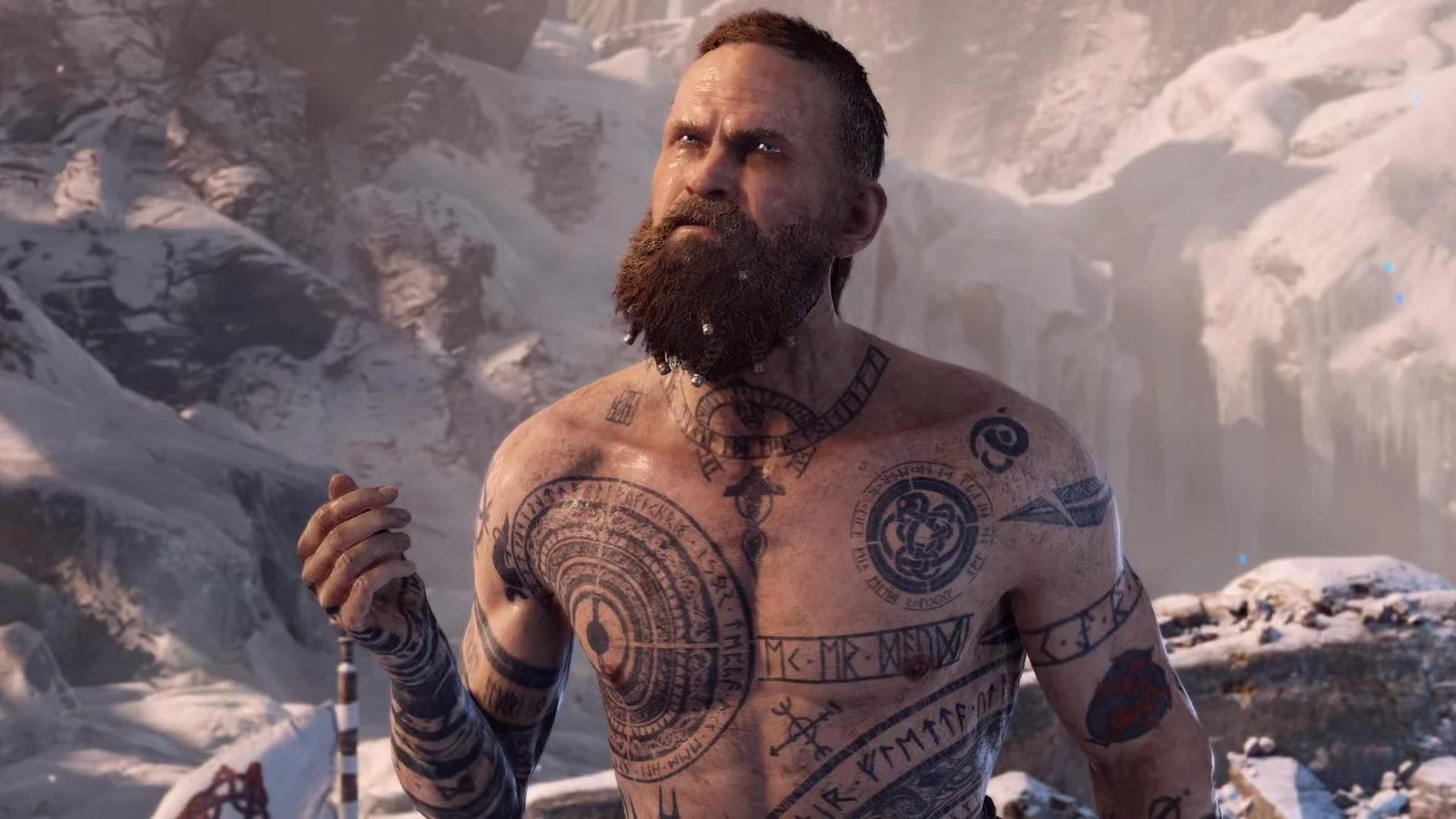
Myth's Baldur is the most beloved of the Æsir, radiant and mourned by all creation when he dies; the game's Baldur — rune-tattooed, embittered, numb rather than beloved — inverts that emotional register almost entirely while keeping the one structural detail that matters: invulnerable to everything except mistletoe, and killed by it either way. What changes is the meaning: myth's mistletoe death starts the grief that precedes Ragnarök; the game's mistletoe death ends a rage nobody in the story is sorry to see go.
Loki
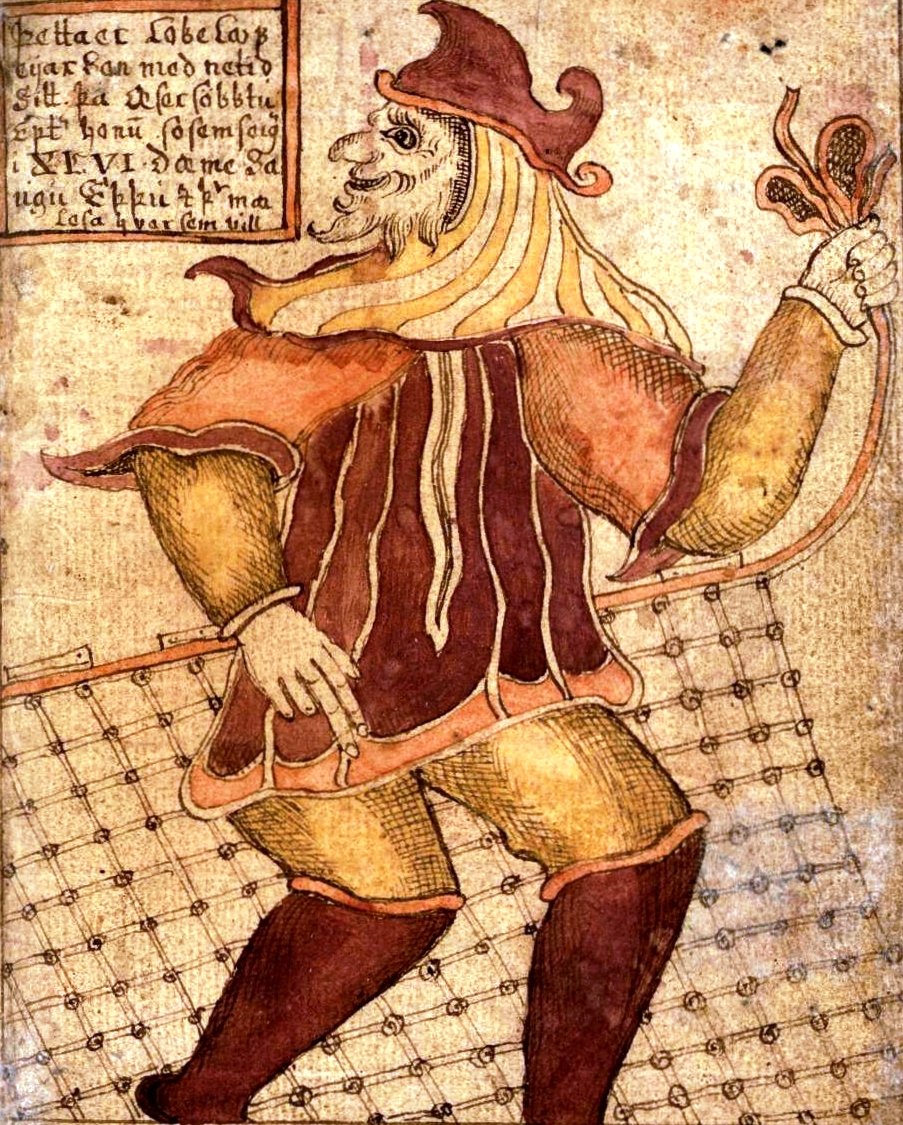
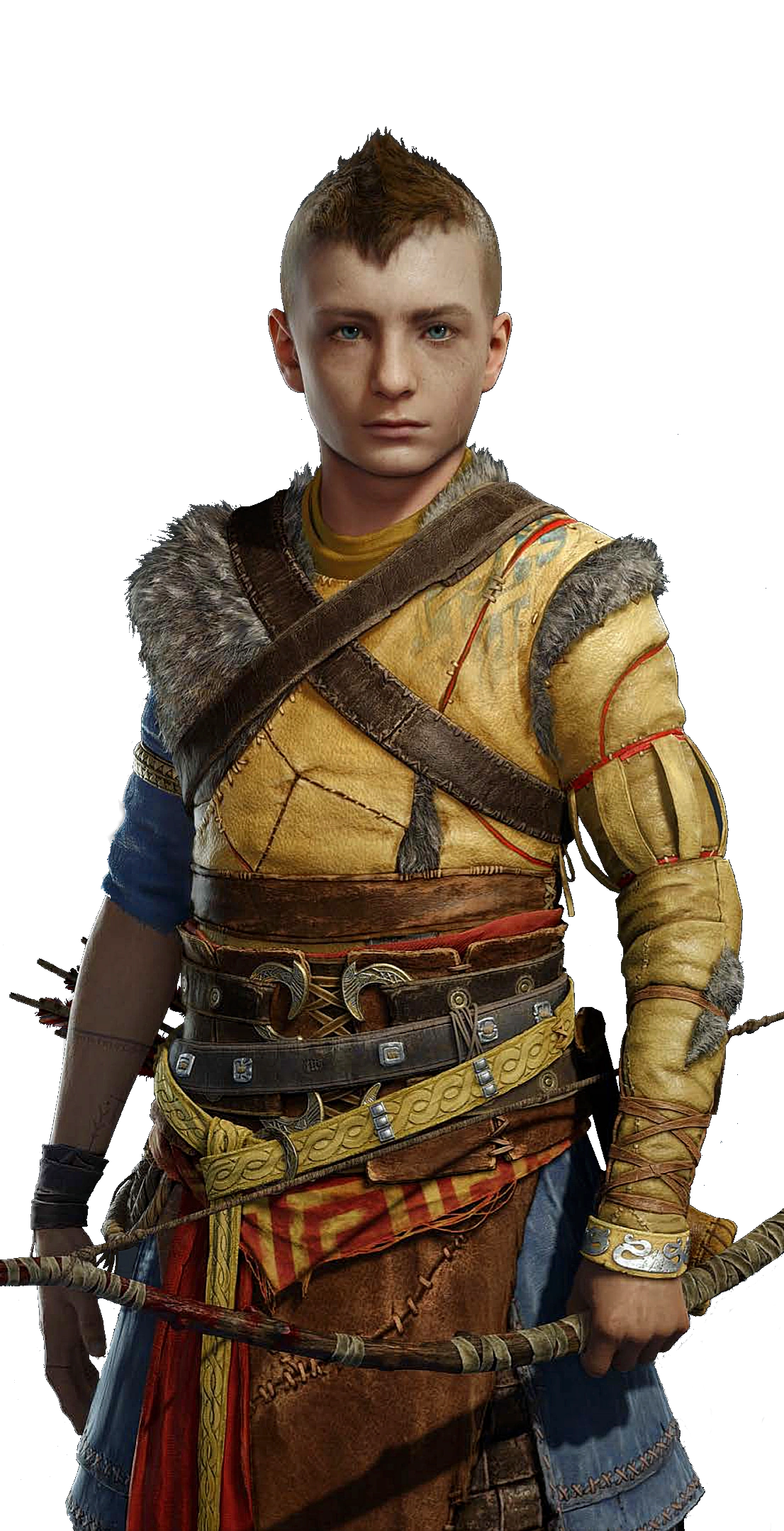
The manuscript shown here depicts Loki with a fishing net nearby — his own invention, from the myth in which he is finally caught hiding from the gods after Baldur's death, then bound with his son's entrails until Ragnarök. The game defers that entire arc: its Loki is a child at the very start of his story, known to the player as Atreus until the final revelation. Nothing about the bound, punished trickster of the myths has happened yet — the game's fiction↔myth loop closes narratively (Atreus is Loki) without yet closing consequentially (this Loki hasn't done anything the myths punish him for).
Jörmungandr
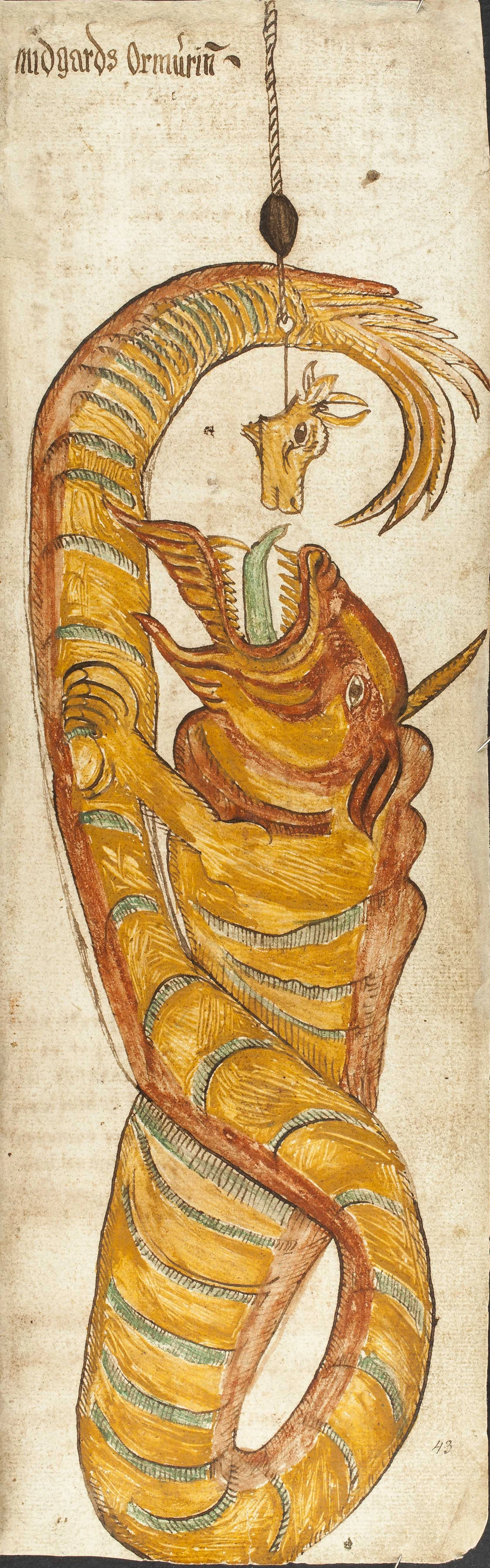
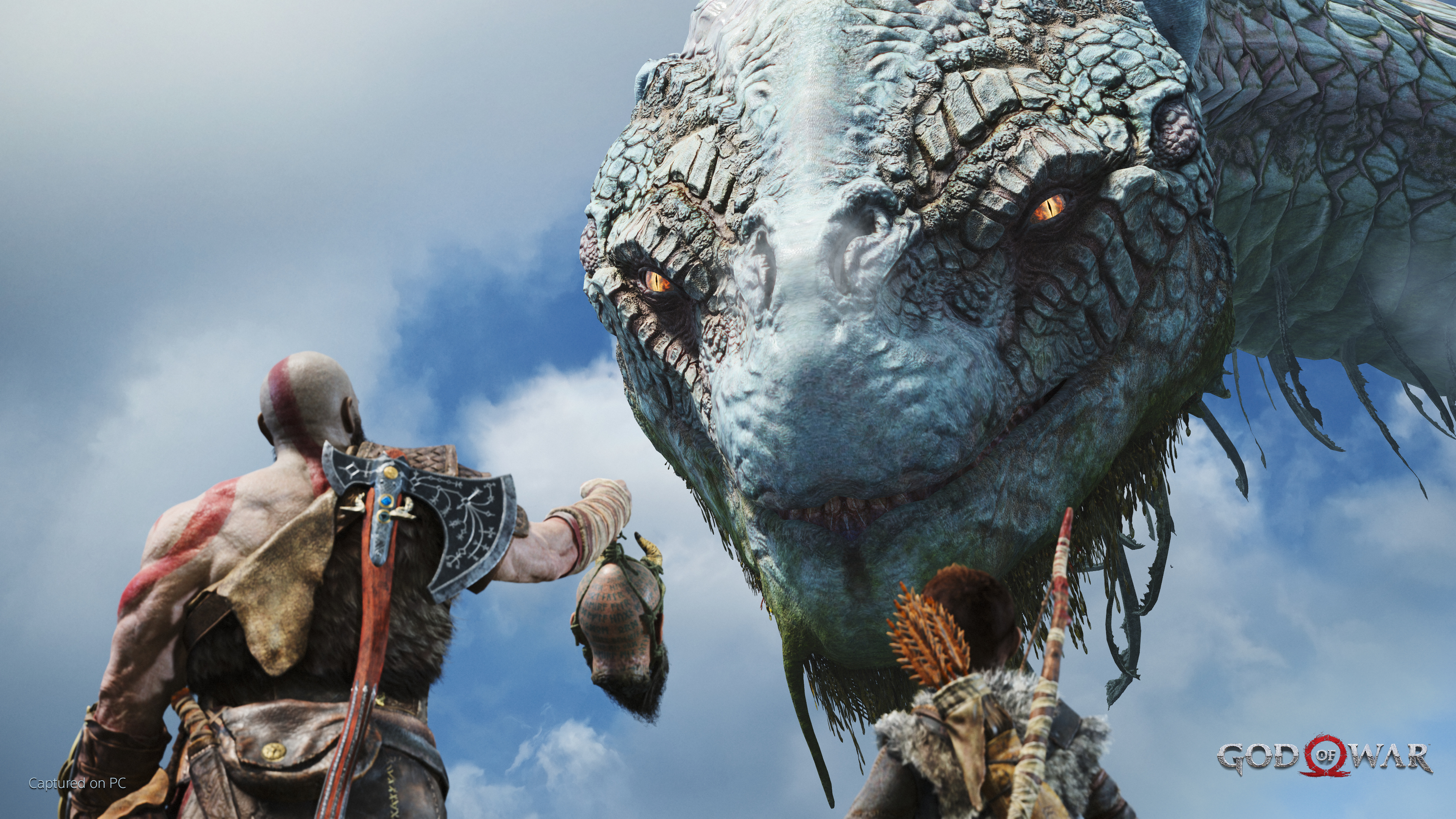
The most dramatic tonal inversion of any figure in the game. In myth, Jörmungandr is a world-ending threat, fated to kill and be killed by Thor at Ragnarök — the manuscript shown fixes it in a static heraldic coil, an emblem of doom. The game instead makes it a character with dialogue (translated by Atreus) who treats Kratos and Atreus as old friends, thanks to the story's nonlinear sense of time — from apocalyptic monster to companion, without changing its size, its name, or its place in the family tree that gow:loki schema:children gow:jormungandr still records.
How to read this site
The site is organised in three sections that follow the three phases of the LODLAM workflow. Each section explains a methodological choice, shows the artefact produced, and links to the raw file.
Knowledge Organization
Selecting the topic, identifying entities and relations across three layers, encoding them in TEI/XML with authority reconciliation, and rendering the article as interactive HTML.
Phase 2Conceptual Model
Reusing standard vocabularies (dcterms, schema.org, FOAF, SKOS, DBO) and coining one new property — gow:reinterprets — to capture the fictional-adaptation-of-myth relation.
Knowledge Representation
Building the RDF/Turtle graph from TEI-defined nodes and relations with rdflib, differentiating reconciliation strategy per entity type, and closing the fiction↔myth loop.
Possible future enrichment
The current graph is deliberately scoped as a representative model rather than an exhaustive catalogue of the game's world. God of War (2018) offers many further points of contact between fiction and Norse tradition that could extend the project while testing whether the present modelling choices remain effective at a larger scale.
Extending entities, places, sources, and relations
A future version could extend the formal entity set with Faye/Laufey and her mythological counterpart; Thor's sons Magni and Modi; the dwarven smiths Brok and Sindri; and further characters such as Mímir and Týr. The mythical realms — including Midgard, Asgard, Jötunheim, Alfheim, Helheim, Niflheim, Muspelheim, Vanaheim, and Svartalfheim, are already identified at mention level in the TEI through <placeName type="mythical">, but they are deliberately outside the current RDF dataset. A later version could promote them to first-class entities through a TEI <listPlace>, authority reconciliation, and explicit relations connecting characters and events to their settings.
The model could also incorporate textual sources such as the Poetic Edda and the Prose Edda. Representing these works as bibliographic resources would make it possible to identify which traditional accounts support each mythological comparison and to introduce a more detailed provenance layer. The current TEI-driven transformation is prepared for this expansion: new entity definitions and <relation> elements can be added to the TEI and materialised as RDF without writing entity-specific transformation code. The same approach could later be extended to God of War Ragnarök (2022), allowing portrayals and reinterpretations to be compared across different instalments without collapsing their distinct narrative contexts.